
Fixing the Machine
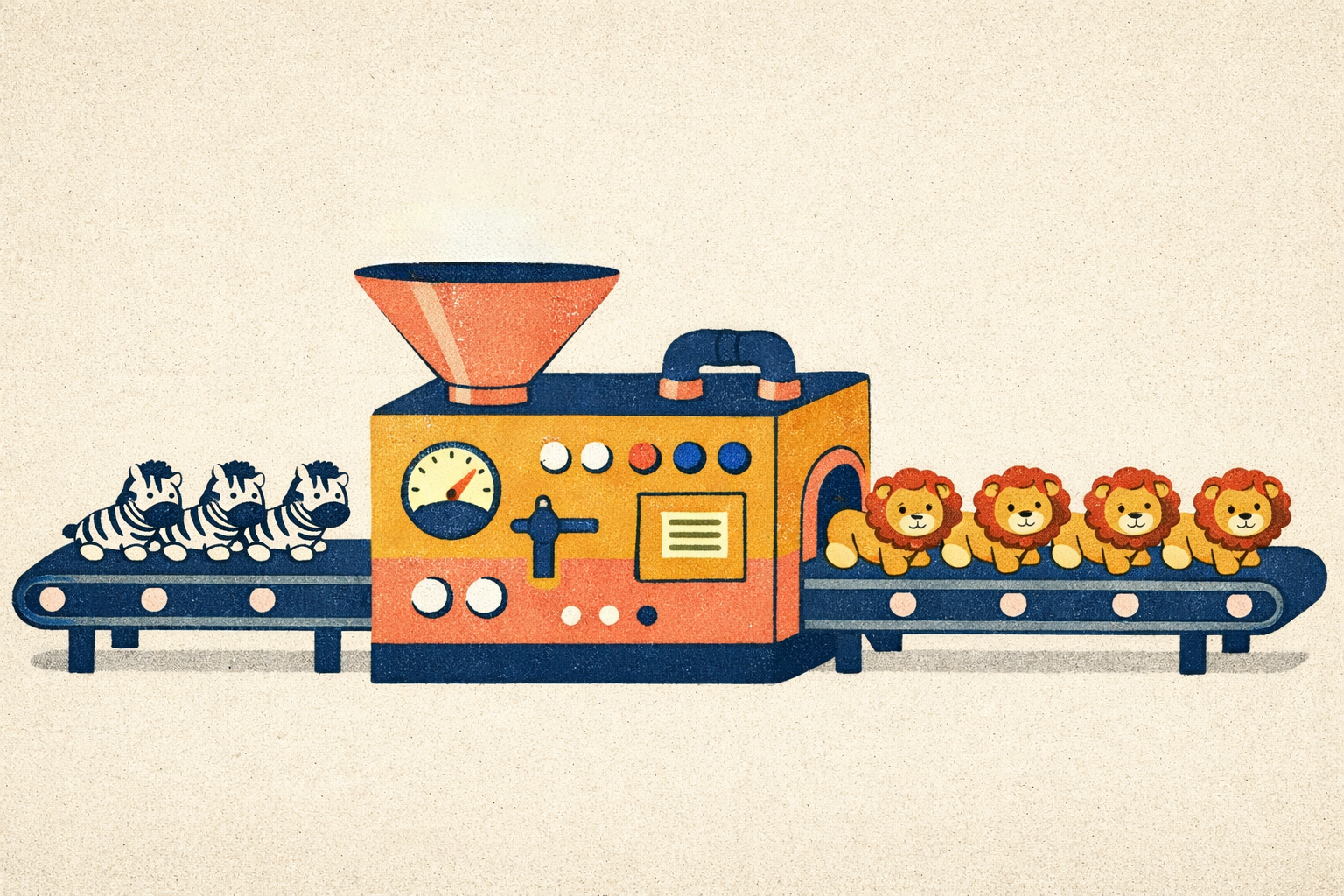
Imagine for a moment, there’s a toy factory with a special machine that produces stuffed zebras. Every time I push a button a stuffed zebra gets made. Now imagine that one day, I decide I don’t want to make zebras any more, but want to make stuffed lions instead. Suddenly, I have a problem. Because the reality is that no matter what I want to happen, nothing is going to change the output of the machine to start producing stuffed lions.
Why the hell am I rambling about zebra machines? Because lately I’ve been thinking a lot about “systems and emergent thinking”. My previous article, Reaching Here Won’t Get You There, touched on this topic – but I wanted to expand further and make a few points even more explicit.
In my day-to-day professionally, but also personally–I see the same pattern frequently. First, some known issue arises. Next, analysis occurs to understand why it happened. Finally, a conclusion is made. More often than not, the explanation is that the same problem occurred because the core components remained the same. In other words, the zebra machine button was pushed and another zebra was produced.
The issue isn’t that the final product differed from our expectations. The root of the of the issue is the machine itself. A classic example that illustrates this is the annual setting and subsequent failing of New Year's Resolutions. Multiple academic studies suggest failure rates of New Year Resolutions to be approximately 80-90% at the 1-year mark. Why? It’s not for lack of willpower. When we think about our biggest goals, we shouldn’t just be fixated on the end state in isolation, we should also be considering the conditions and environment that make arriving at and achieving said end states optimally conducive.
NYT Best-selling author, James Clear sums this all quite nicely in his book Atomic Habits, “You do not rise to the level of your goals. You fall to the level of your systems.” Creating lasting change takes time and hard work. Despite our best desires to adapt quickly, our physical machinery (behavioral habits) often lags behind our more nimble software (impulses).
My answer to all this is to learn to differentiate, recognize, and accept when my outcomes are actually the result of habits and systems. I’d argue that people (not me) who wake up every morning at 5AM to work out don’t often think of it as a choice, it’s just what they do every day. You don’t suddenly become one of these people out of sheer desire, rather, a behavioral machine must be constructed that enables the change. Early bed-times must be honored, gym clothes set out, alarms set, etc. etc.
My final piece of unsolicited advice to anyone on this topic is to simply take inventory of the “machines” you already have. Honestly ask yourself what are the conditions and settings that are creating the outcomes you’re currently seeing. Only then can you start meaningfully tweaking the components that will result in new outputs. Frustration at creating “yet-another-zebra” is pointless. To fix the outcome, first fix the damn machine.